

A Photographic Study of HPHT Diamonds

Updated: Aug 11
PGS Laboratory recently completed a study of lab-grown fancy yellow and orange diamonds grown and manufactured by the Gemesis Corporation. The findings produced a more comprehensive understanding of the HPHT process as the staff was able to identify numerous features that were characteristic to these stones. The following photomicrographs illustrate some of the key takeaways from that study.
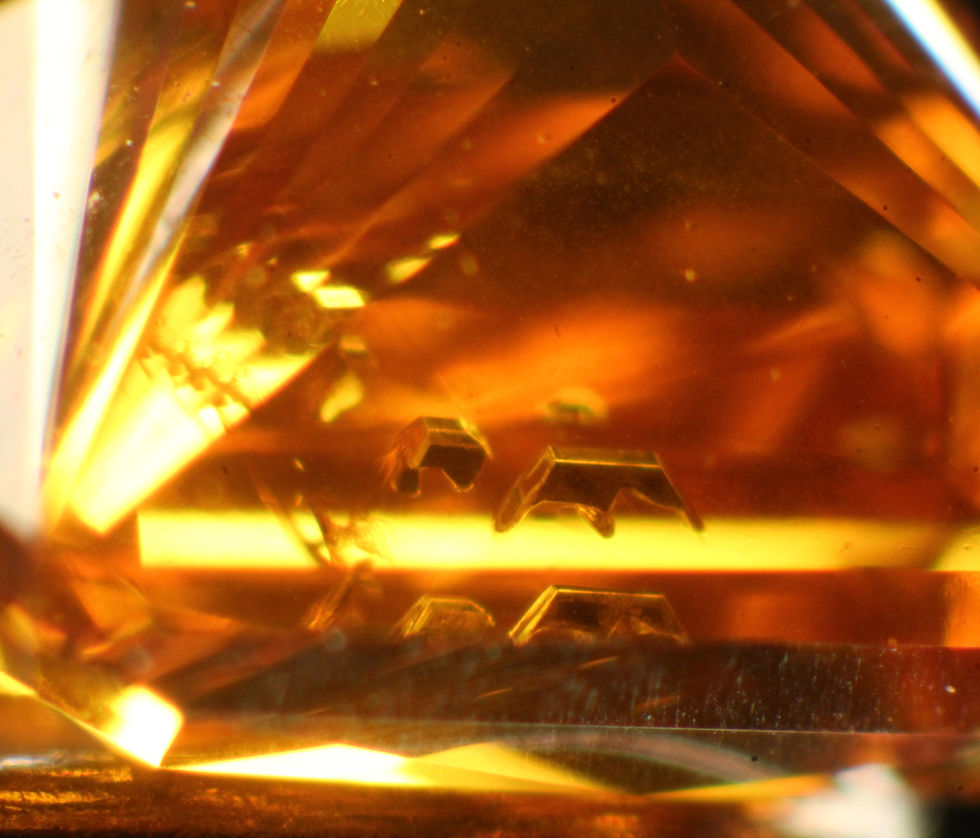
Photo 1: Metallic inclusions in these HPHT synthetic diamonds were quick indicators of the stone’s man-made origin. Metals are rarely captured inside natural diamond as it grows in the Earth’s mantle. The presence and frequency of pieces of metal as intact inclusions in these stones indicated that what we were dealing with was of unnatural origin. In HPHT synthetic stones metal can be captured inside a crystal because the pressurized chamber (referred to as an anvil) that the diamond is forming in is made up of dense metals. Tiny bits of these metals flake off of the anvil during the procedure and are captured inside the host crystal.

Photo 2: Metallic flux was a common feature in these synthetic stones. The flux inclusions typically appear globular and rounded. While rounded crystals may occur in natural diamond the shape and relief of these inclusions was clearly inorganic. Our study found dozens of cases of metallic flux in these stones, as seen in the above examples.

Photo 3: In this photo, the metallic flux appears black and opaque where it meets the surface of the diamond.

Photo 4: Dendritic, fern-like inclusions were observed in one sample stone. Seen here at 40X and 60X, the inclusions appear fibrous and pointy. While these inclusions appear to have crystallized inside their diamond host in some pattern, the lab was not able to identify what the type of inclusion was, nor why in settled in this pattern. Destructive tests were unavailable for this study. However, given the frequency of metallic inclusions observed inside these stones it is possible that they too are of a metallic nature. That being said, they did not test as being magnetic when placed beside a strong magnet.

Photo 5: The metallic-based inclusions observed inside many of these stones meant that the vast majority of the stones were attracted to powerful magnets. While the stones themselves were not magnetized, the inclusions captured within the crystalized diamond were easily drawn to the magnet. The strength of the magnetism varied based on the quantity of metallic inclusions inside a particular stone. It is important to note that both the metallic pieces and the metallic flux were equally attracted to the magnet.
Distinguishing a laboratory-grown stone from a natural one changes what a piece is worth, and every report we issue states which it is. If you want a diamond identified and valued, see our jewelry appraisals in Chicago.


Comments